
Amazon Brand Store Design That Gives Your Brand Room to Be Explored
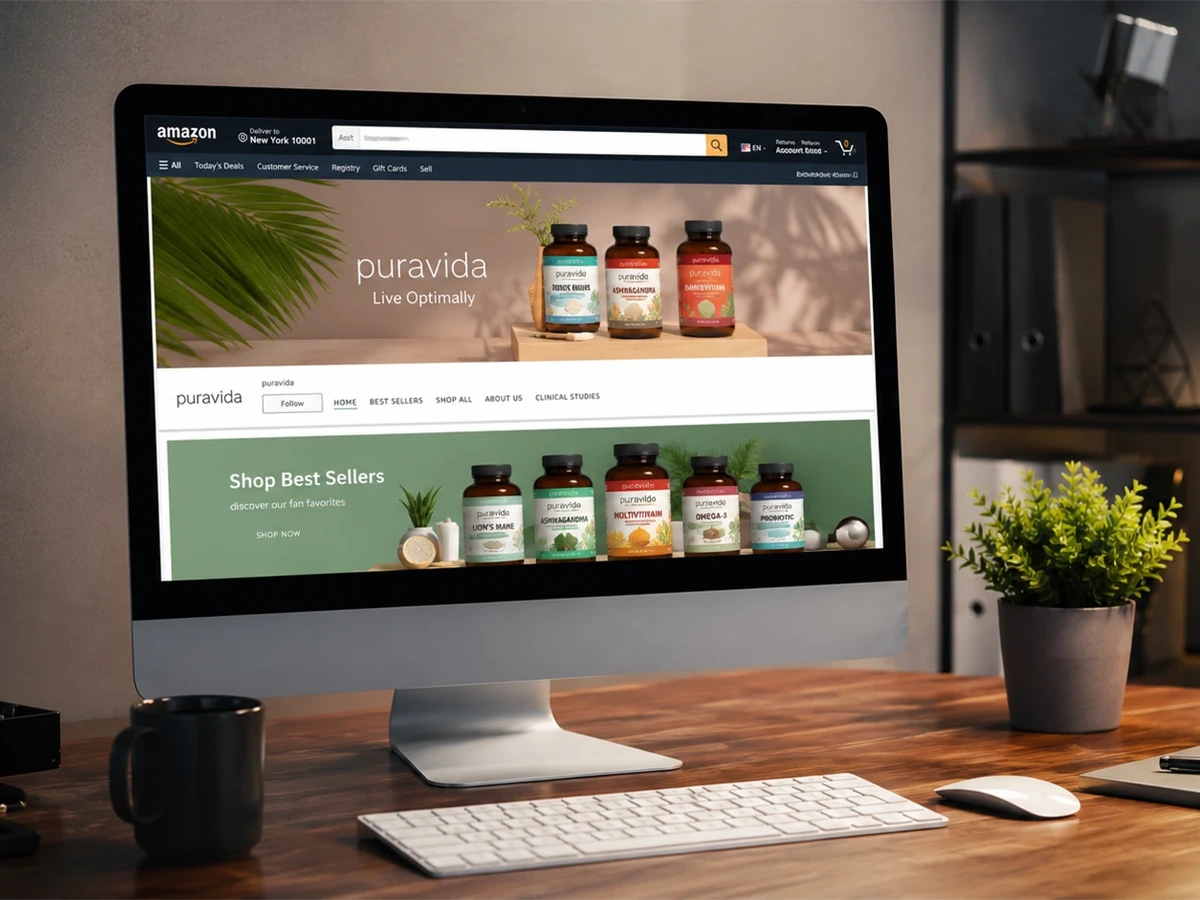
Create a structured, branded destination on Amazon where shoppers can explore your story, product categories and featured collections. We plan page hierarchy, navigation, merchandising and responsive creative around the Brand Store tools available to your account.
Everything Needed to Turn a Store Into a Useful Brand Destination
A Store should make it easier to discover products and understand the brand. We combine structure, merchandising and creative so the experience has a clear purpose beyond simply placing banners above product grids.
Store Architecture
Plan the homepage, categories, product collections and subpages around the way shoppers should move through the product range.
NavigationHomepage Design
Create the main brand landing experience with a strong opening message, visual direction and pathways into the most important categories.
First ImpressionCategory Pages
Build focused subpages for product lines, collections, audiences or use cases so shoppers do not have to browse one undifferentiated catalog.
DiscoveryBrand Story Sections
Use appropriate Store space to communicate brand identity, values, product philosophy and visual language without overpowering shopping navigation.
Brand ContextProduct Merchandising
Organize product groupings and supported Store widgets around featured ranges, categories, launches or other relevant merchandising goals.
Product RangeResponsive Creative
Review key visual assets and layouts across desktop and mobile Store views so the experience remains understandable on smaller screens.
Mobile-AwareStore Refreshes
Update existing Stores when the product range, branding or priority collections have changed and the current structure no longer reflects the business.
IterationLaunch Support
Prepare final assets and Store structure for review, submission and publication according to the agreed project scope and account access.
DeliveryPlan the Navigation Before Designing the Banners
Amazon allows Brand Stores to contain one or more pages and supports up to three levels of page hierarchy. We use that flexibility only where it improves navigation; a smaller catalog may need a simple structure, while a larger range can benefit from clear category and subcategory paths.
Page count follows the real product range instead of creating empty subpages for appearance.
Category names should help shoppers know what they will find before they click.
Homepage, category, collection and brand-story pages should each solve a different discovery need.
Visual storytelling should support product discovery rather than hiding the catalog behind decorative layouts.
Build Around the Way Shoppers Explore a Brand
The Store should help a shopper move from broad brand interest to a relevant product group without unnecessary friction. Every major section should support discovery, education or merchandising.
Establish the Brand
Use the homepage to establish visual identity, product context and the most important navigation choices.
HomepageOrganize the Range
Break larger catalogs into meaningful categories, collections or use cases that make browsing more efficient.
CategoriesAdd Brand Context
Use relevant visual storytelling to help shoppers understand the brand, product philosophy or reasons behind the range.
StorytellingMake Products Easy to Reach
Keep product collections and shopping paths prominent so the Store remains a useful commerce experience.
MerchandisingReview the Store for Desktop and Mobile
Amazon's Store Builder lets creators switch between desktop and mobile views during design. We use that review step to check hierarchy, cropping, text density and the clarity of important navigation paths on smaller screens.
Hero Cropping
Review whether key products, text and focal points remain visible across device views.
Navigation Clarity
Keep category labels and major shopping paths understandable without excessive complexity.
Readable Messaging
Reduce visual clutter and avoid tiny embedded text that becomes difficult to read on mobile.
Product Access
Make sure key collections remain easy to reach after layouts compress for smaller screens.
From Catalog Structure to a Publish-Ready Brand Store
A defined workflow keeps Store architecture, creative and merchandising connected to the actual brand and product range.
Store & Catalog Review
Review brand assets, product groups, current Store if one exists, account access and the key categories shoppers need to discover.
Architecture Planning
Map the homepage, subpages, navigation labels and merchandising logic before creative execution begins.
Creative Direction
Develop page layouts, banners, tiles, imagery and visual hierarchy around the approved Store structure.
Responsive Review
Check important pages across Store Builder views, refine cropping and readability, and prepare final assets.
Delivery & Launch Support
Finalize the agreed Store build or creative package and support the submission process according to project scope.
See Amazon Storefronts Built to Organize the Brand
Questions About Amazon Brand Store Design
These answers cover eligibility, Store structure, responsive design, existing Store redesigns and how Brand Stores connect with the rest of your Amazon presence.
What is an Amazon Brand Store?
A Brand Store is a free, self-service branded destination on Amazon where eligible brands can create a multi-page shopping experience for their products, brand story and related content.
Who is eligible to create an Amazon Brand Store?
Amazon describes Brand Stores as available to sellers and vendors enrolled in Amazon Brand Registry. Brand Registry itself has trademark and brand-enrollment requirements, so account eligibility should be confirmed before the Store project is finalized.
Does Amazon charge to create or maintain a Brand Store?
Amazon states that creating and maintaining a Brand Store is free. Our fee, where applicable, is for the strategy, architecture, creative design and project work we provide—not for Amazon's Store tool itself.
How many pages can an Amazon Brand Store have?
Amazon currently allows Stores to have one or more pages and up to three levels of page hierarchy. The homepage is the top-level page, with additional subpages below it. We recommend using only as much hierarchy as the catalog genuinely needs.
Can you redesign an existing Amazon Store?
Yes. We can audit an existing Store, review its navigation, category structure, visual consistency and product merchandising, then retain useful elements while rebuilding the sections that need improvement.
Do Brand Stores need separate mobile designs?
Amazon's Store Builder lets creators switch between desktop and mobile views while building. A version is generated for the other device view, and assets can be optimized for different devices. We therefore review key Store sections in both views rather than assuming the desktop composition will translate perfectly.
Can a Brand Store have category and subcategory pages?
Yes. Multi-page Stores can use subpages to organize product ranges, collections or categories. For a large catalog, clear category structure can make the Store easier to browse than placing every product on one page.
Can you coordinate the Store with A+ Content and listing images?
Yes. Our broader Amazon creative services include A+ Content design and listing image design. Those assets can share the same brand language while being adapted to their different Amazon placements.
Will a new Brand Store guarantee more sales?
No. A Store can provide a stronger branded destination and improve how products are organized for discovery, but sales also depend on traffic, product demand, price, reviews, availability, competition, advertising and other factors. We do not promise a specific sales result from Store design alone.
How do we start an Amazon Brand Store design project?
Send us the current Store URL if one exists, the brand's product range, key categories and available creative assets through the free audit or contact page. We can review the current setup and recommend an appropriate Store structure and creative scope.
Ready to Build a Better Amazon Brand Store?
Send us your current Store or product catalog. We can review the navigation, brand presentation and category structure, then recommend the Store design scope that makes sense for your brand.